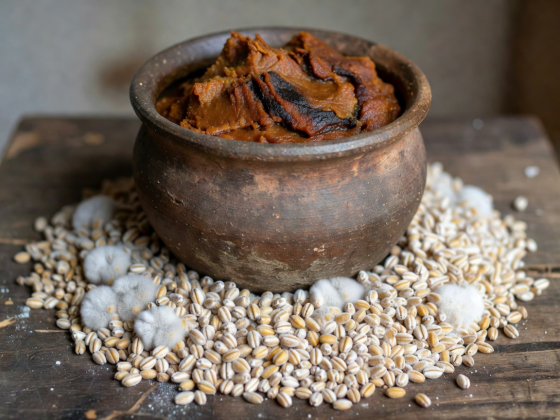
1. Koji: The Engine of Asian Fermentation
Unlike Western ferments that rely predominantly on bacterial acid production, traditional Japanese miso, shoyu, and sake begin with Aspergillus oryzae (koji-kin). Inoculated onto steamed rice or barley at 30°C for 48 hours, the fungal hyphae envelop each grain with a fragrant white mycelial mat, synthesizing two foundational enzyme families:
- Amylases (Alpha & Glucoamylase): Break complex grain starches down into simple fermentable sugars (glucose).
- Proteases (Acid & Neutral Proteases): Hydrolyze dense soybean proteins into free amino acids, principally monosodium glutamate (the molecular essence of umami).
- Lipases: Cleave lipids into fatty acids that react with alcohols during aging to synthesize aromatic esters.
2. Shiro Miso vs. Aka (Red) Miso Profiles
The duration of aging and salt concentration dictate the microbiological path of the fermenting mash:
| Style | Koji-to-Soy Ratio | Salt Concentration | Aging Window | Flavor Profile |
|---|---|---|---|---|
| Sweet White Miso (Shiro) | 2.0 : 1 (High Koji) | 4% – 6% | 3 to 8 Weeks | Sweet, light, creamy, mild floral acidity |
| Yellow Miso (Shinshu) | 1.2 : 1 (Balanced) | 9% – 11% | 3 to 6 Months | Savory, nutty, versatile umami baseline |
| Red Miso (Aka) | 0.8 : 1 (High Soy) | 12% – 14% | 1 to 3 Years | Deep, earthy, intense Maillard browning notes |
| Pure Soy Miso (Hatcho) | 0 : 1 (100% Soy Koji) | 10% – 12% | 2 to 3 Years | Dense, fudgy, chocolate and espresso undertones |
3. The Non-Enzymatic Maillard Reaction in Aging
Many novice fermenters believe the deepening brown color of aged miso is caused by oxidation. In reality, the slow condensation between reducing sugars and free amino acids at ambient cellar temperature drives non-enzymatic Maillard reactions, creating melanoidin pigments that provide powerful antioxidant capacity.